HOME › QUALITY › TRACEABILITY
Traceability
One of the Caribbean’s most advanced vessel-to-buyer digital traceability systems. Every fish is tracked through 8 documented stages, giving buyers complete confidence in what they’re purchasing.
STEP ONE
Vessel Registration & Catch Recording
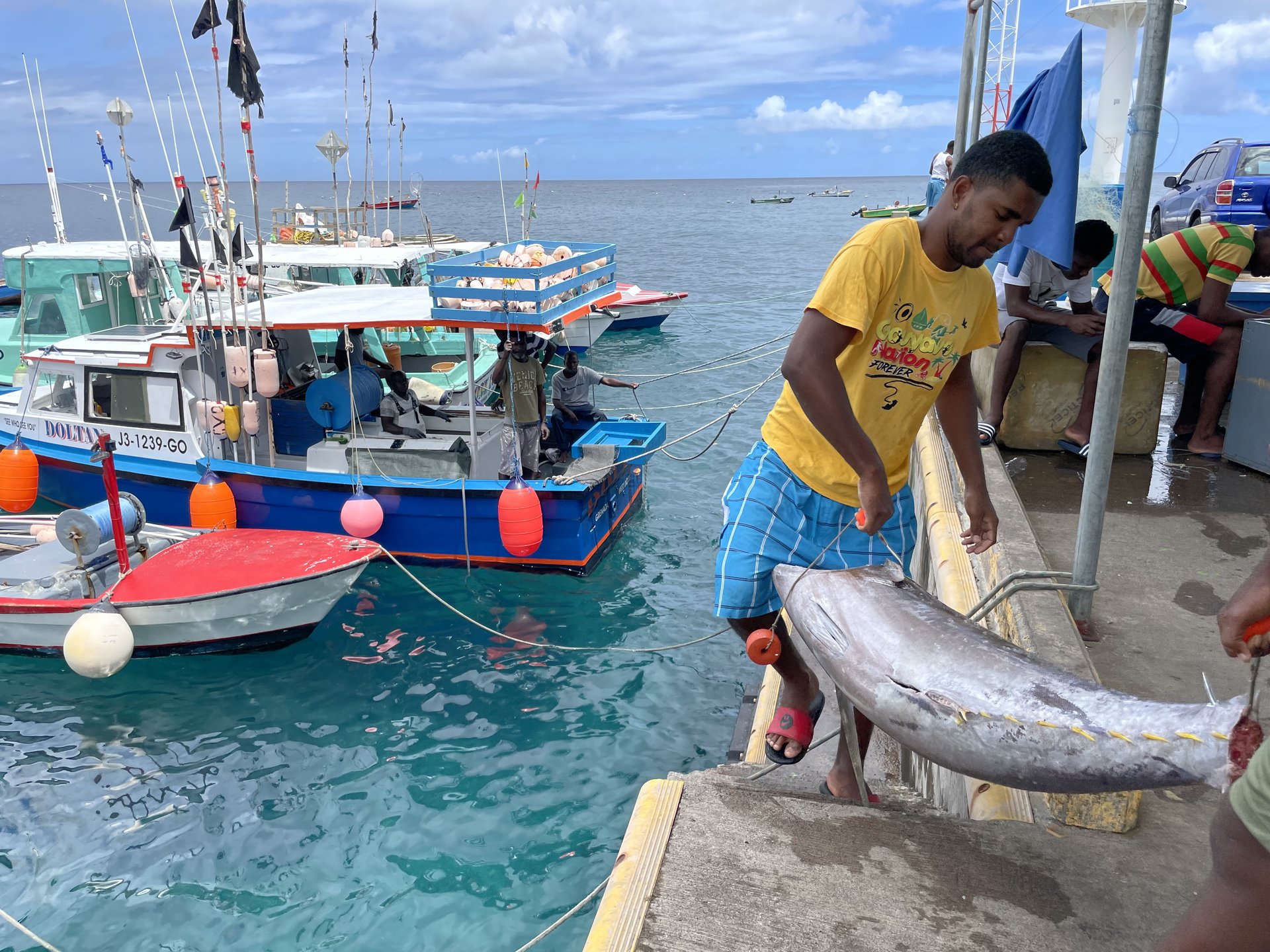
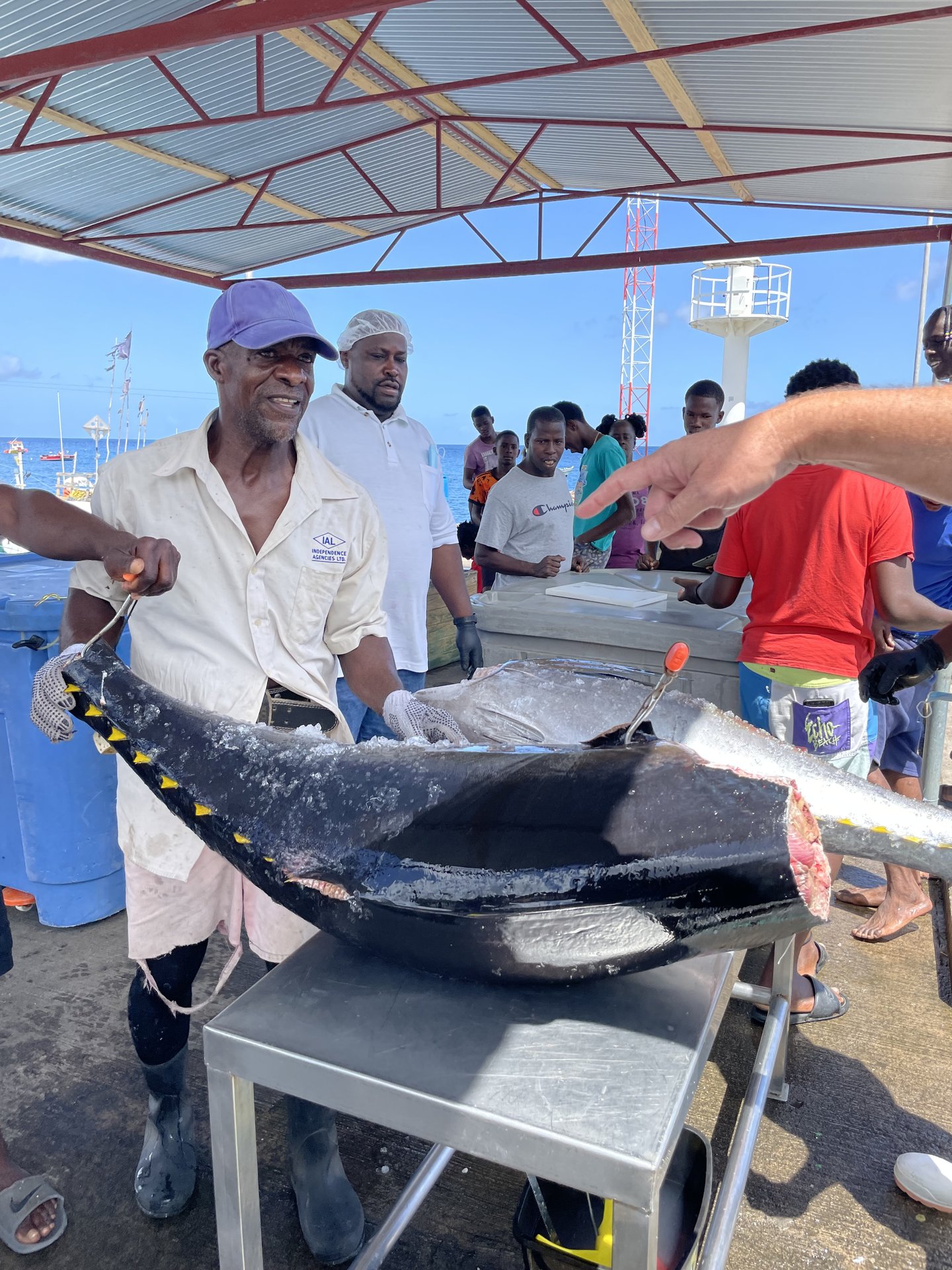
The traceability chain begins before the fish reaches the dock. Every vessel supplying GNExTT is registered in our system. At the point of capture or purchase, a catch record is created linking the fish to its origin before it ever enters our facility.
KEY DATA CAPTURED
- Vessel name, registration number & captain
- Fishing area / catch zone
- Gear type (pole-and-line, trolling, artisanal longline)
- Species, grade, and estimated live weight
- Date and time of catch or purchase
STEP TWO
Receiving & Cold Chain Intake
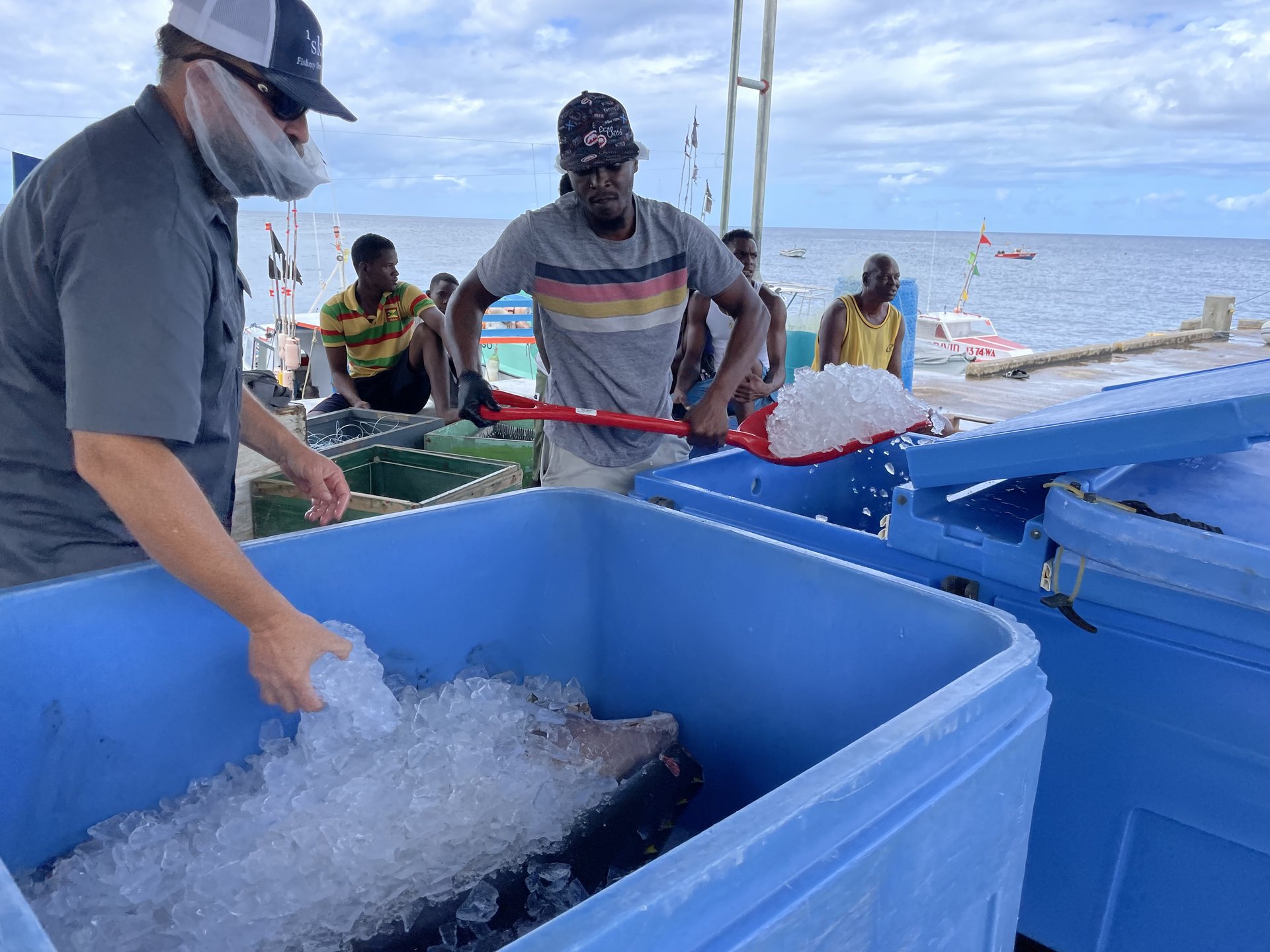
When fish arrives at our Gouyave facility it is immediately inspected, weighed, and scanned into the system. A unique barcode tag is assigned, and this single identifier travels with the fish through every subsequent stage. Temperature is logged to begin the digital cold chain record.
KEY DATA CAPTURED
- Unique receiving barcode assigned to each fish
- Received weight (scales linked to record)
- Internal grading score (A / B / C)
- Receiving temperature (°C) at cold chain start
- Linked back to vessel and catch record (Step 1)
STEP THREE
Issue to Processing & Custom Cutting
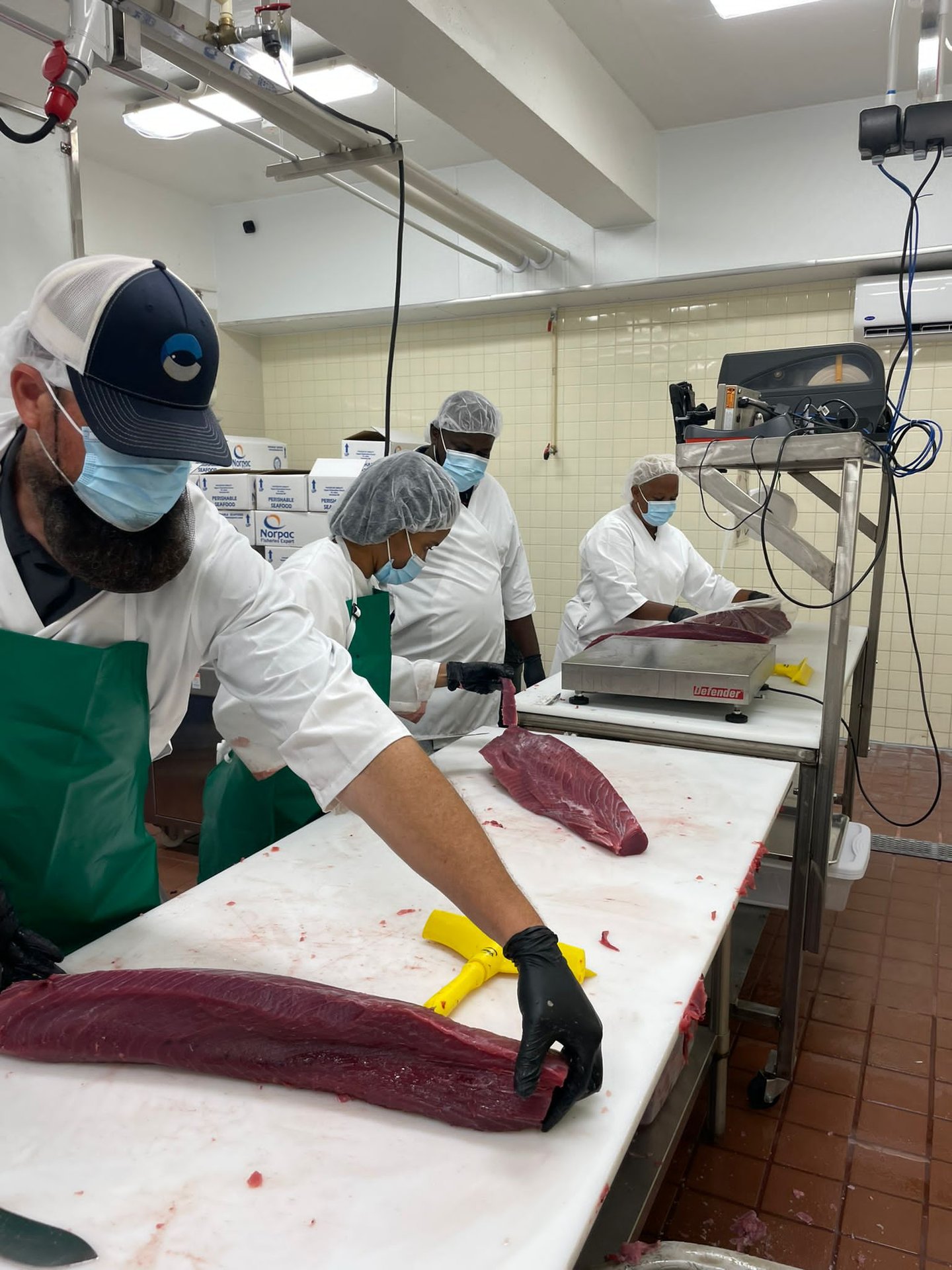
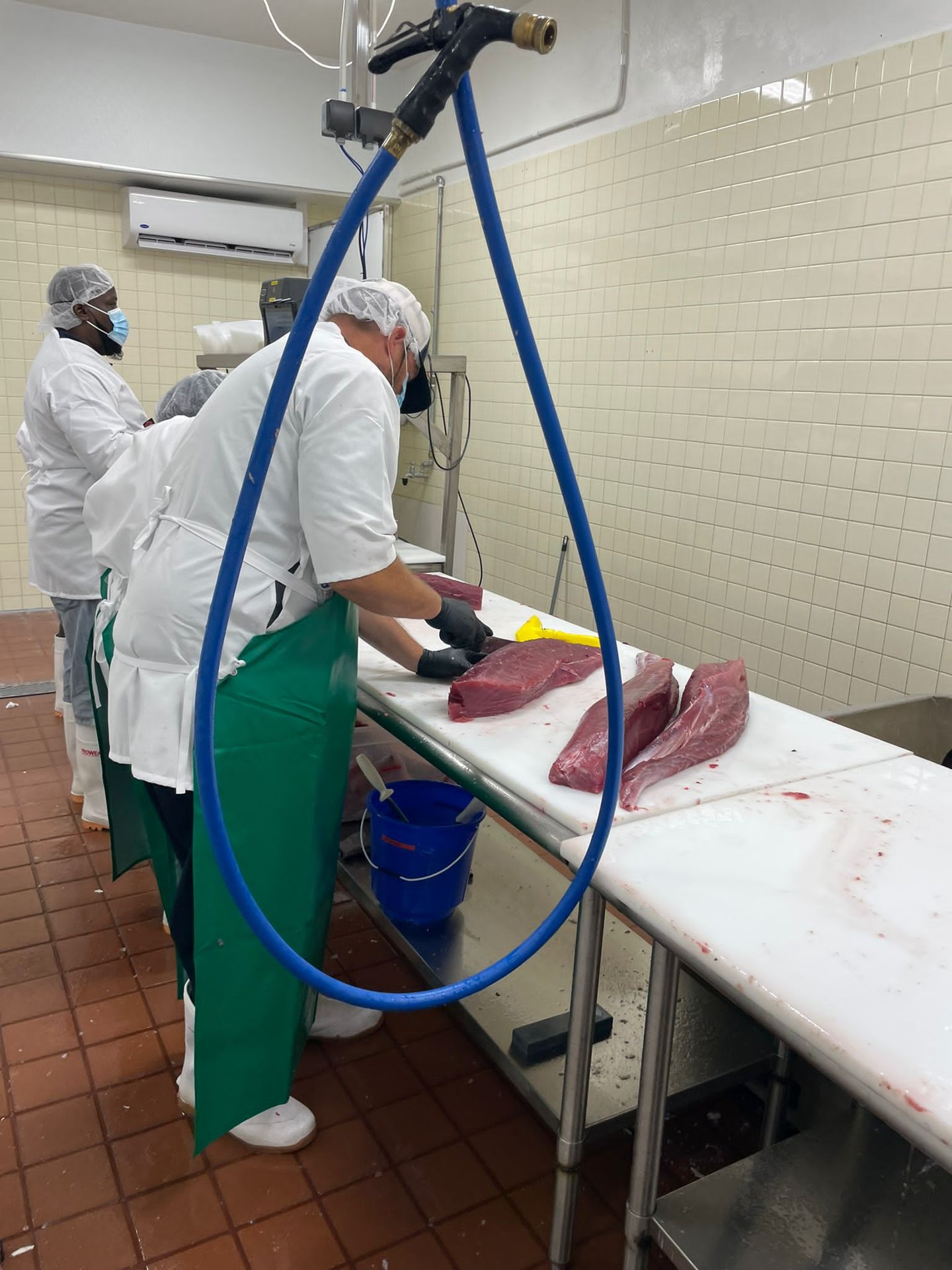
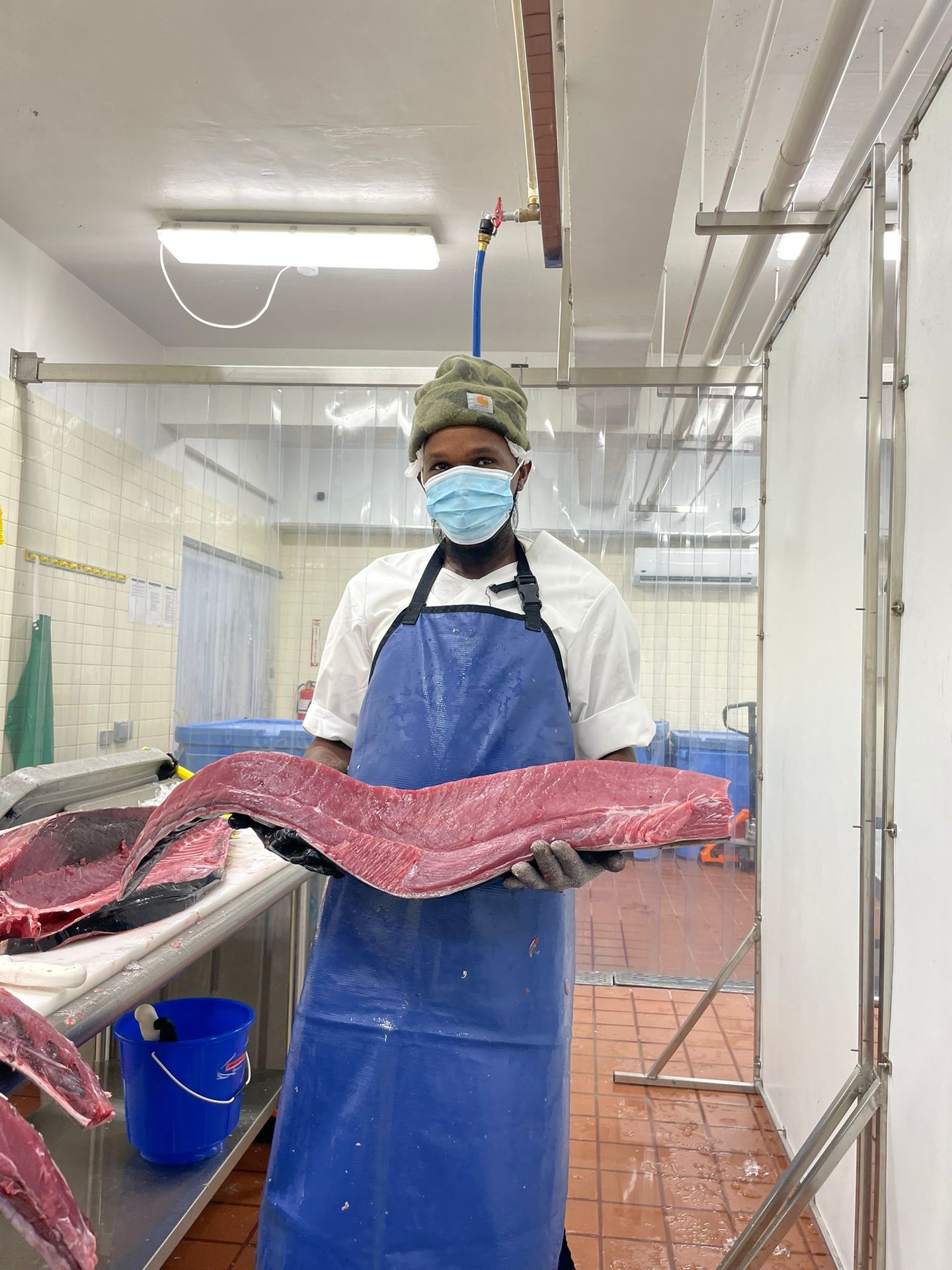
Fish is issued from cold storage to the processing floor against a specific buyer order or production run. Our trained team cuts each fish to buyer specification, including loins, fillets, bellies, or end cuts. The original receiving barcode travels with the fish throughout, and every cut is tied back to the fish it came from.
KEY DATA CAPTURED
- Issuance record with date and time out of cold storage
- Buyer order or production work order number
- Cut type (loins / fillets / bellies / end cuts)
- Processing team member recorded
- Receiving barcode maintained as parent link
STEP FOUR
Weigh, Package & Label
Each finished cut is individually weighed, vacuum sealed, and assigned a new product-level barcode permanently linked to the original raw material receiving barcode. This creates a two-way connection between the finished product and the fish it came from. Labels carry all compliance information for the buyer.
KEY DATA CAPTURED
- Finished product barcode (linked to raw material barcode)
- Net weight (grams, precision scale)
- Vacuum seal date and time
- Species, grade, cut type on label
- Country of origin: Grenada, W.I.
STEP FIVE
Order Fulfillment to Exact Specification
Finished labelled product is scanned against the buyer’s work order to confirm correct items, quantities, and cut specifications. Cartons are assembled and assigned a unique master carton label that links to all product barcodes packed within. This gives downstream buyers a single scan point for the whole consignment.
KEY DATA CAPTURED
- Work order / buyer PO reference
- Scan confirmation of product against order specification
- Master carton label with unique carton ID
- Total net weight per carton
- All packed product barcodes linked to master carton
STEP SIX
Cold Chain Logistics & Export
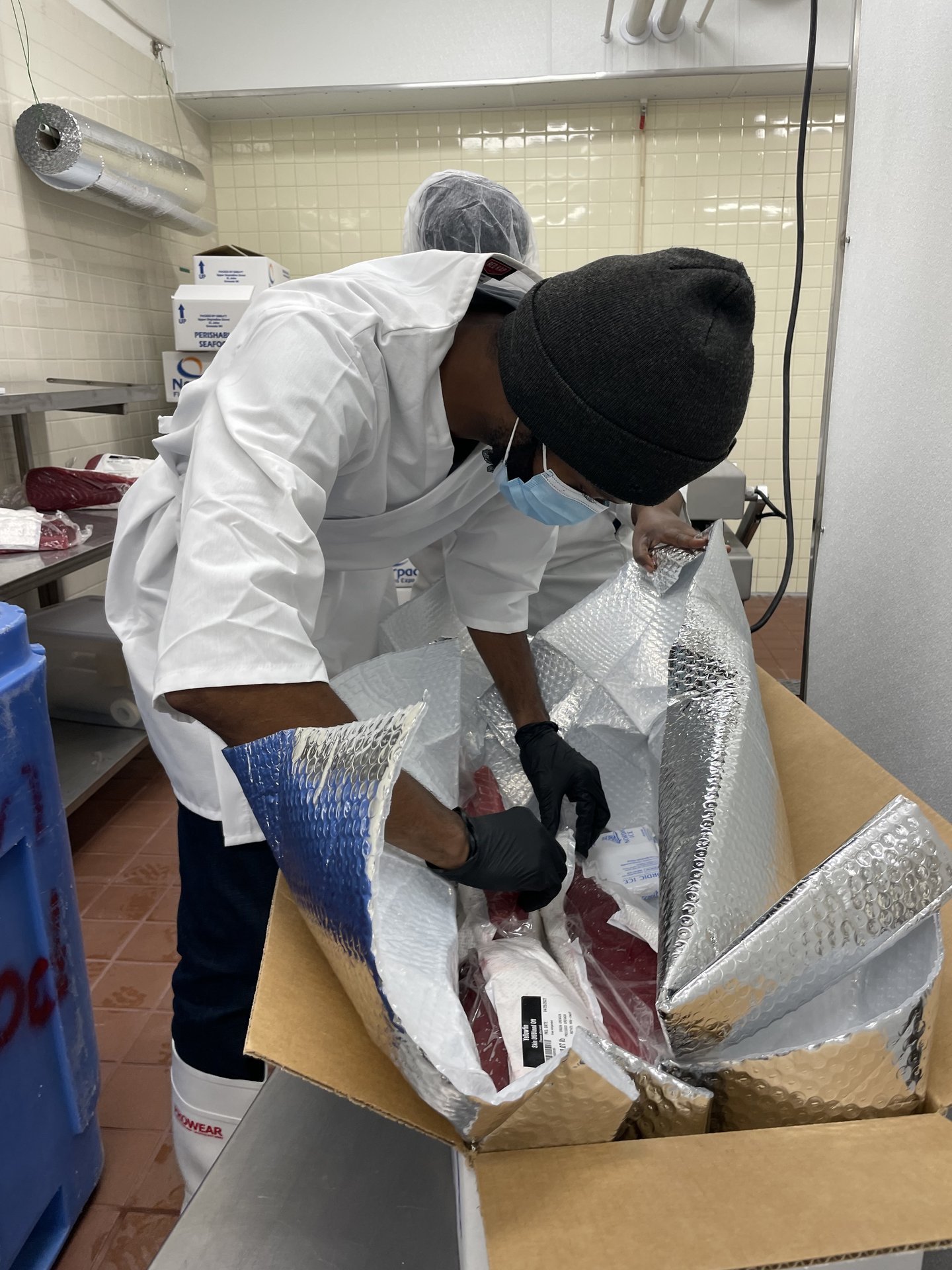
Cartons are loaded under cold chain controls into insulated export boxes or refrigerated transport. A shipping label is generated that traces the consignment back through the entire chain. For export shipments, all documentation required for FDA, customs, and buyer compliance is produced from the same traceability record, so there is no separate paperwork chain.
KEY DATA CAPTURED
- Dispatch date and cold storage departure temperature
- Shipping label linked to master carton IDs
- Carrier / flight / vessel details (export only)
- Destination country and importer reference
- FDA Prior Notice filed (US-bound shipments)
STEP SEVEN
Data Sharing & Regulatory Reporting
GNExTT’s traceability data is shared upstream and downstream to support buyer compliance, sustainability verification, and government reporting. Catch data is contributed to Grenada’s centralised Ministry of Fisheries database. Our system is designed to be compatible with GDST (Global Dialogue on Seafood Traceability) interoperability standards.
KEY DATA CAPTURED
- Catch data shared with Grenada Ministry of Fisheries database
- GDST-compatible data format (interoperable)
- FDA Bioterrorism Act compliance records
- Sustainability documentation for MSC / C-FIP reporting
- Buyer-facing traceability summary available on request
STEP EIGHT
Trace Your Product
The system supports traceability in both directions. A buyer receiving a finished loin can trace backward to the vessel, captain, catch area, receiving record, and processing details. A fisherman who landed a catch can trace forward to see which products were made from it and where they shipped. This two-way traceability is what makes GNExTT’s system the first of its kind in the Caribbean.
WHAT BUYERS CAN VERIFY
- Which vessel caught the fish and when
- Fishing area and gear type used
- Date received, temperature at intake, grade assigned
- Processing date, cut type, and packaging details
- Export documentation and cold chain continuity
TRACEABILITY BACKED BY CERTIFICATION
Fully Traceable. Fully Verified.
When you buy from GNExTT your seafood comes with complete traceability data, including catch method, fishing area, vessel, processing record, and cold chain history. This allows you to make verified claims to your own customers.